Inspection Service
Sewer Lateral Inspection & Compliance
Camera inspection and San Francisco compliance guidance before you're stuck at the closing table.
Overview
The sewer lateral is the pipe that carries wastewater from a building to the city's main line under the street. It is buried, it is out of sight for the entire time you own a property, and in San Francisco it is disproportionately old — a large share of the city's laterals are original clay pipe, in some cases over a century old.
San Francisco is also one of the few cities in the Bay Area where the lateral's condition is not just a maintenance question but a transaction requirement. The city's point-of-sale program means a defective lateral generally has to be repaired, or a compliance bond arranged, before escrow can close — which turns a plumbing issue into a deadline. Buyers and sellers who don't know this in advance sometimes find out only when it threatens their closing date.
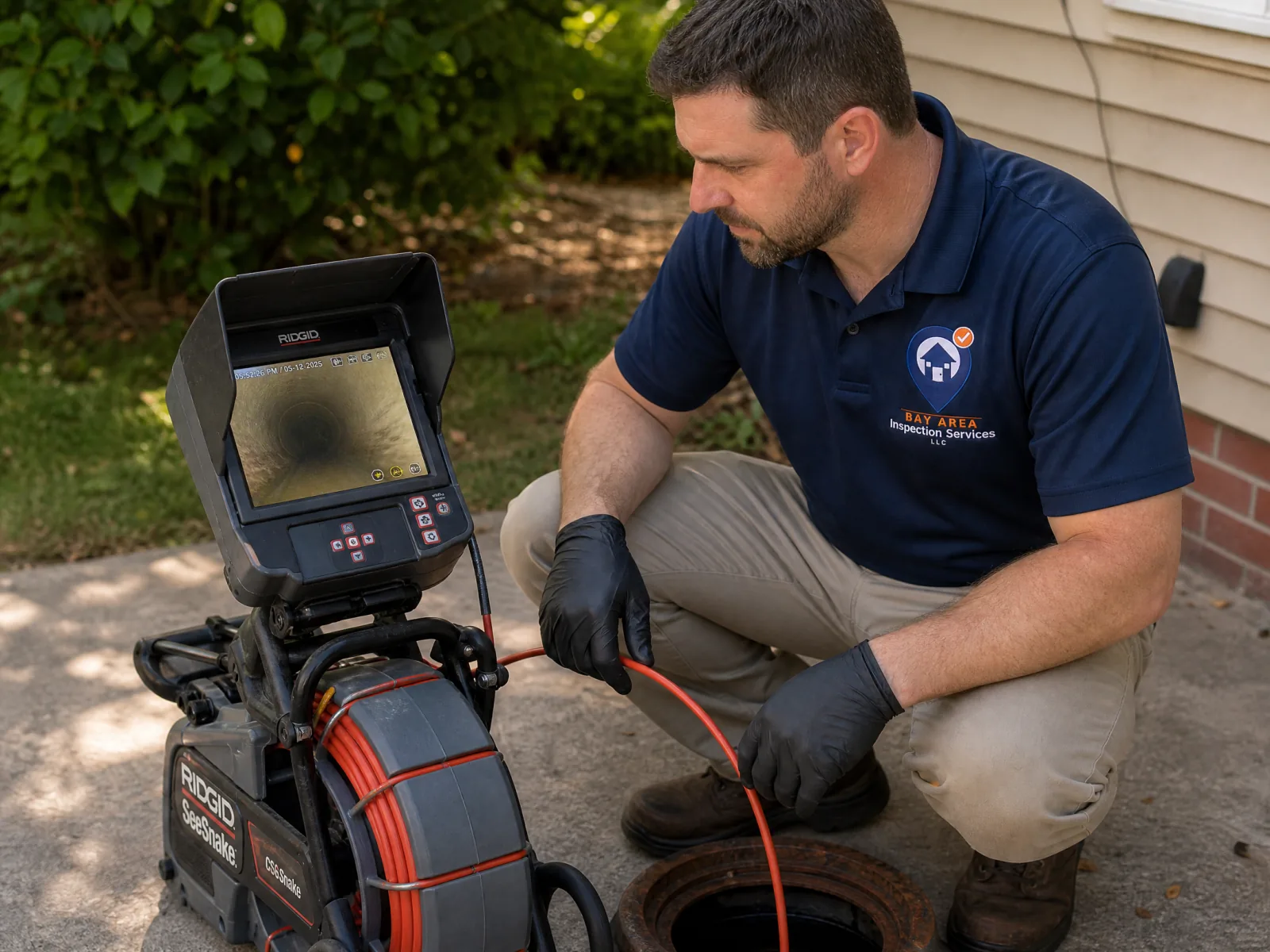
We run a full push-camera inspection of the accessible line, record it start to finish, and mark the exact location and depth of anything we find. You get the video, a plain-language explanation of what it means for your timeline, and a clear next step — we don't perform the repair or issue the city's compliance certificate ourselves, since that requires a licensed contractor and the city's own process, but we make sure you go into that process with real information rather than a guess.
Book Sewer Lateral Inspection
Sewer lateral inspection is priced per visit and depends on line length and the number of accessible cleanouts. It is often bundled with a full home inspection when scheduled together. Call for a quote.
(216) 505-8827Same-day availability · Report same day
What's Included
Full-Length Camera Inspection
A complete push-camera run from an accessible cleanout toward the city main, or as far as conditions allow.
Recorded Video Documentation
The full inspection saved as a video file you can share with a licensed plumber, the other party in the transaction, or the city.
Defect Location & Depth Marking
A surface locator pinpoints the exact position and depth of any defect, so a repair estimate is based on real numbers rather than a guess.
Pipe Material & Condition Assessment
Identification of original clay, cast iron, or later ABS/PVC sections, and the condition of each.
Root Intrusion & Offset Documentation
The two most common defects in San Francisco's older laterals, each noted with its exact footage location in the line.
Plain-Language Findings Summary
What we found translated into what it likely means for your transaction timeline — not a raw video file left for you to interpret.
The Equipment We Use
Every instrument below is used on a standard sewer lateral inspection — none of it is an upsell.
Self-leveling color push camera
Threaded down the lateral from an accessible cleanout, recording continuously so the full run can be reviewed rather than judged from a single frame.
Sonde transmitter and surface locator
Pinpoints the exact depth and position of a defect from street level, so a repair estimate is based on where the problem actually is rather than an assumption.
Distance and footage counter
Measures exactly how far into the line each defect sits, tied directly to the timestamp in the recorded video.
Cleanout access tools
Opens and reseals cleanout caps without damaging aging fittings — on older laterals the cap itself is often original and can be brittle.
Video export and archiving
The full inspection is saved as a reviewable file rather than a handful of screenshots, so nothing gets lost between the inspection and the repair conversation.
What We Actually Find
The findings that come up again and again on Bay Area properties.
Root intrusion at joints
San Francisco's street trees send roots into joints on original clay pipe. It is the single most common defect I document in the city.
Offset joints and bellies
Sections that have settled out of alignment or sagged, creating a low spot where waste collects and backs up over time instead of draining freely.
Cracked or crushed clay pipe
Original clay laterals are, in much of the city, over a century old and crack under soil movement, nearby construction, or simple age.
Undersized or missing cleanouts
Many older San Francisco properties have no accessible cleanout at all, which complicates both this inspection and any future maintenance.
Prior patch repairs
A partial repair from years ago that stopped short of the actual defect, leaving the underlying problem in place under a section that looks fine on the surface.
Shared or private lateral connections
Some San Francisco properties share a lateral with a neighboring building or connect through a private easement, which changes who is actually responsible for what.
Sewer Lateral Inspection in San Francisco
This requirement is close to unique to San Francisco among the cities I serve. Peninsula and South Bay cities generally treat lateral condition as a negotiating point between buyer and seller; San Francisco ties it directly to the transaction itself through its point-of-sale compliance program, with the city's Sewer Lateral Program handling inspection standards, certification and the bonding process for anything that doesn't pass.
The age of the housing stock makes this more than a paperwork exercise. Most of the city was built out before 1940, laterals were laid in clay, and the mature street trees that make San Francisco's residential blocks so pleasant are exactly what sends roots into aging pipe joints. Given how tight San Francisco escrow timelines typically run, the sequencing matters: getting the scope done early, rather than waiting for it to become a mid-escrow surprise, is usually the difference between a manageable repair and a stalled closing date.
Who Books This
Sellers listing an older San Francisco home
A scope done before listing means a defective lateral gets fixed on your schedule, not discovered mid-escrow on the buyer's.
Buyers close to removing contingencies
Knowing the lateral's condition and what it will cost to address before you're financially committed to the purchase.
Real estate agents managing a transaction
Documentation you can move on immediately, since a lateral finding late in escrow puts the closing date at risk.
Owners with recurring backups or slow drains
A camera inspection identifies the actual defect, rather than guessing from symptoms at the fixtures.
Our Process
Schedule & Access Check
We confirm there's an accessible cleanout, or identify the best access point on site before the visit.
Camera Run
A full push-camera inspection from the cleanout toward the city main, recorded start to finish.
Locate & Document
Any defect found is marked for exact depth and position and logged against its footage location in the video.
Findings & Next Steps
You receive the video plus a plain-language summary, and we point you toward licensed repair contractors and the city's compliance process where needed.
On the Job
Frequently Asked Questions
Ready to schedule your sewer lateral inspection?
Same-day appointments and same-day reports. Get honest, lab-backed answers from a certified inspector who actually built homes.