Inspection Service
Mold Inspection & Air Quality Assessment
A thermal and moisture-based mold assessment that finds the source, not just the spot on the wall.
Overview
Mold is the Bay Area's quiet problem. Our damp coastal microclimate, aging housing stock, and slab-on-grade construction create the perfect conditions for hidden moisture — and where there's moisture, mold follows. By the time you can see or smell it, the colony is usually well established behind walls, under flooring, or in the crawl space.
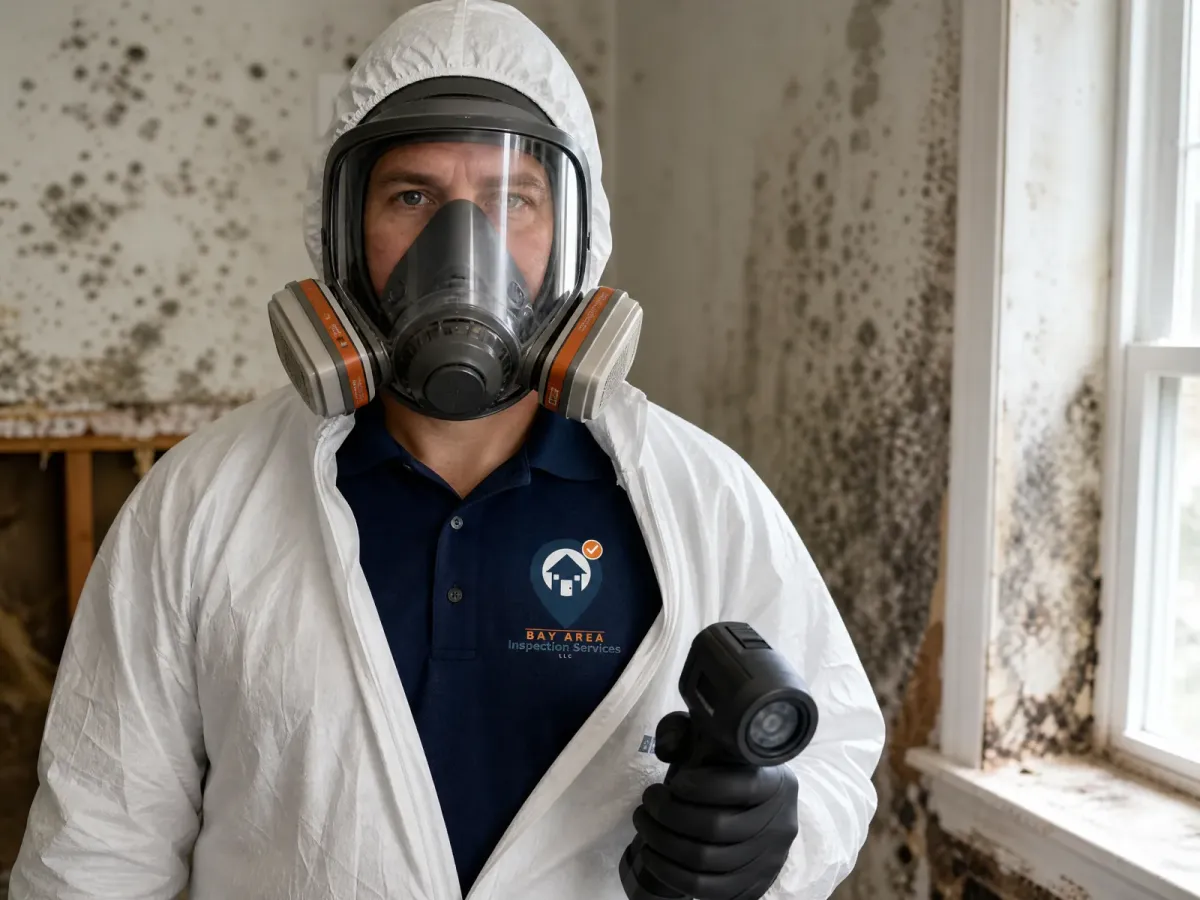
Our mold inspection goes far beyond a flashlight and a guess. We combine a trained visual assessment with infrared thermal imaging, calibrated moisture meters, and psychrometric readings to find both visible growth and the hidden moisture source feeding it — because treating the mold without finding the water just resets the clock.
Because we're an inspection-only company, we have zero incentive to oversell remediation. Our job is to give you an honest, documented assessment — nothing more, nothing less.
Book Mold Inspection
Starting at $279 for a standard visual, thermal and moisture assessment. Larger properties are quoted before we book. Call for a fast, transparent quote.
(628) 230-0357Same-day availability · Report same day
What's Included
Full Visual Assessment
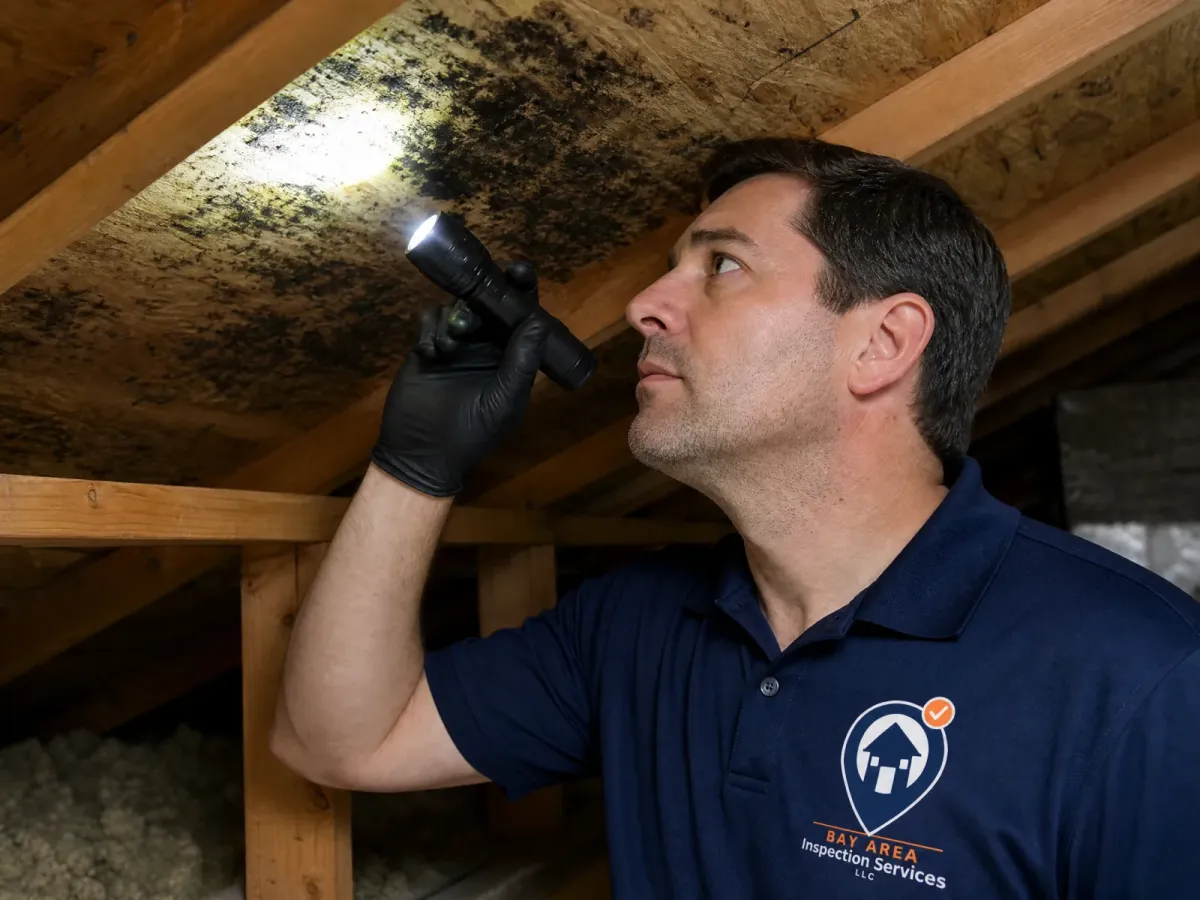
Room-by-room inspection of all accessible areas including attics, basements, crawl spaces, and under sinks.
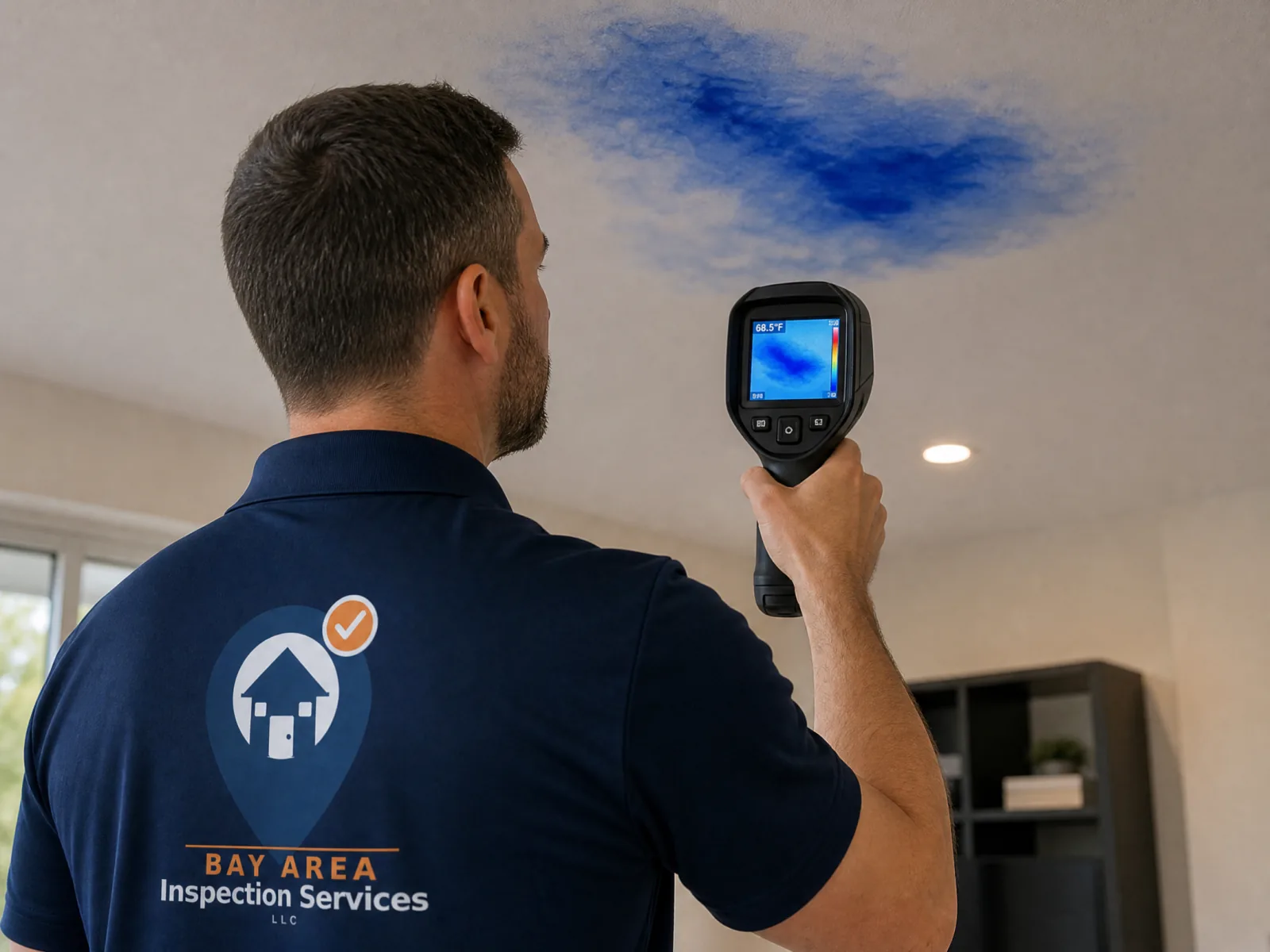
Infrared Thermal Imaging
We scan walls and ceilings for the temperature differences that reveal hidden moisture you can't see.
Moisture Mapping
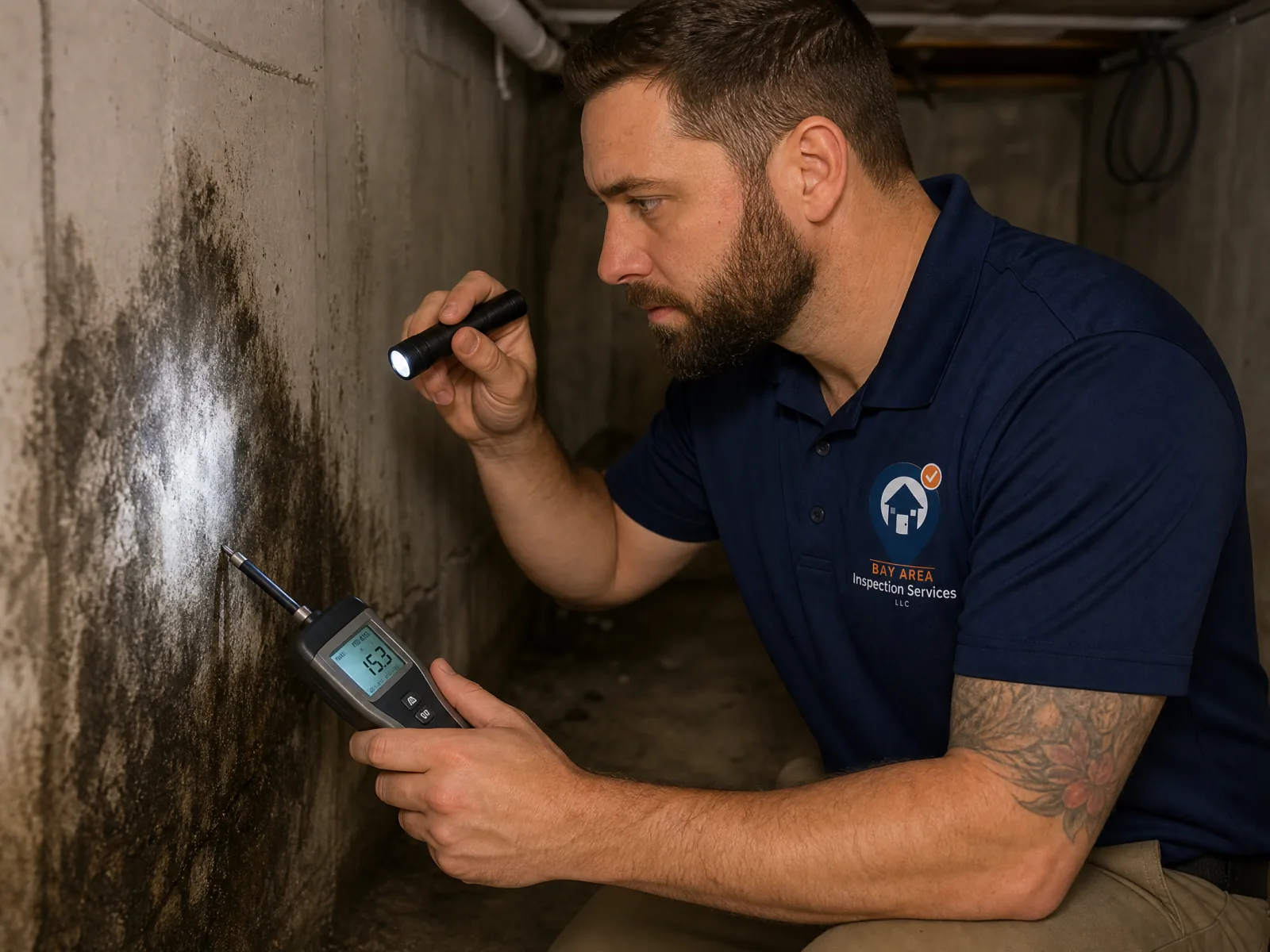
Calibrated moisture meters pinpoint elevated readings in drywall, subfloors, and framing.
Humidity & Condensation Assessment
Psychrometric readings distinguish a condensation problem from an active leak — the two need completely different fixes.
The Equipment We Use
Every instrument below is used on a standard mold inspection — none of it is an upsell.
Infrared thermal camera
Reveals the temperature differences created by damp material behind an intact wall or ceiling, so we can find moisture without opening anything up.
Pin and pinless moisture meters
Confirms and quantifies what the thermal camera suggests. Pinless readings scan broad areas; pins give a definitive reading in a specific spot.
Hygrometer and psychrometric readings
Measures relative humidity and dew point, which is how we tell a condensation problem from a leak.
Borescope camera
Inspects wall cavities, chases and closed framing bays through a small access hole when there is reason to look inside.
What We Actually Find
The findings that come up again and again on Bay Area properties.
Growth behind bathroom tile and under vanities
Bathrooms remodelled without upgrading ventilation are the single most common source of indoor mold I write up. The tile looks fine; the substrate behind it is not.
Crawl space fungal growth on joists and subfloor
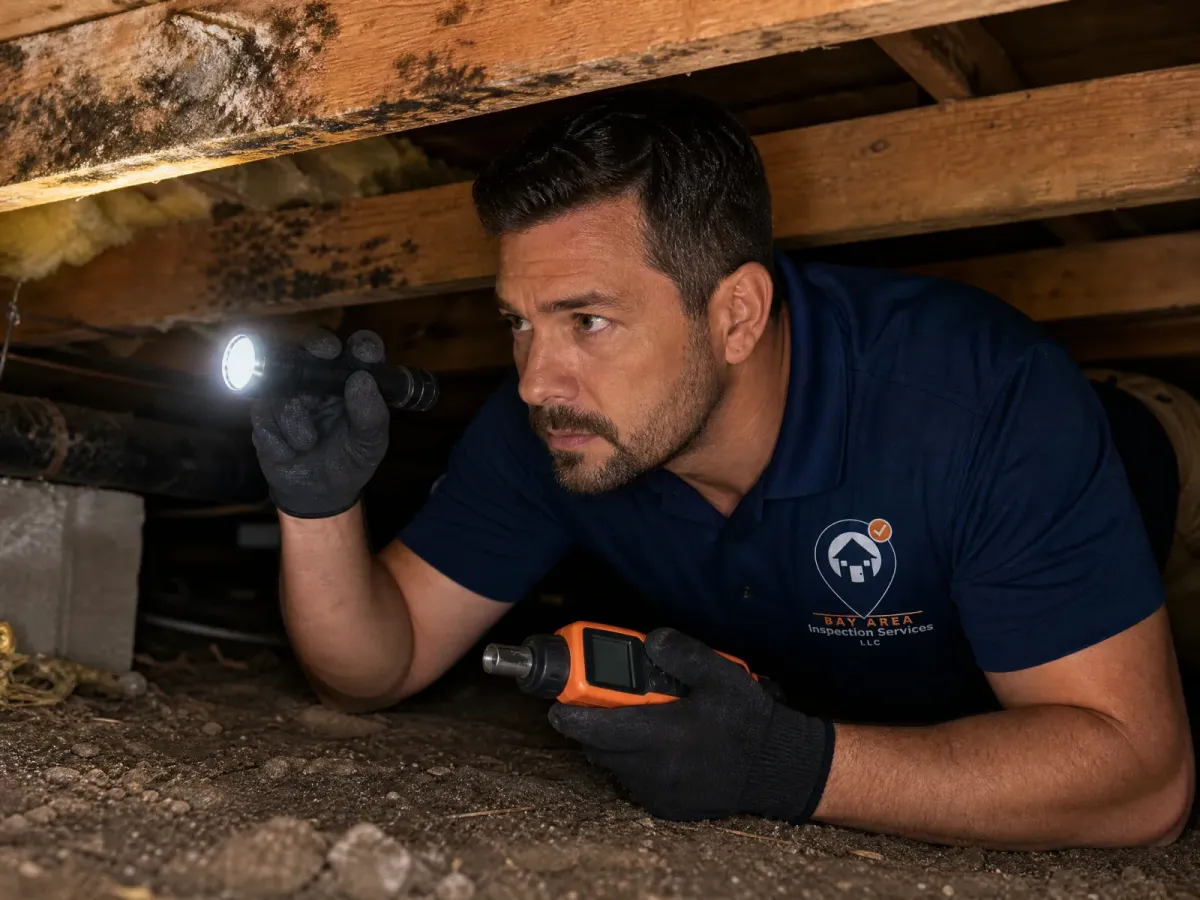
Damp soil, missing or torn vapour barrier, and blocked vents produce visible growth on floor framing. Very common in older Bay Area homes at low elevation.
Condensation mold on exterior-wall closets
Cold exterior walls plus poor air circulation inside a closet produce surface growth on drywall and on stored contents. Frequently mistaken for a leak.
Window sill and frame growth from single-pane condensation
Original single-pane glazing sheds condensation onto sills all winter. The result is persistent growth at the frame and staining below it.
Concealed growth from historic roof or plumbing leaks
A leak that was fixed years ago often left wet insulation and framing behind it. The repair stopped the water; nothing dried the cavity.
Musty odor with no visible source
Sometimes the smell tells a story the eye cannot. When there's a persistent musty odor with nothing visible, there is usually a reservoir somewhere — and that is what the thermal scan and moisture mapping are for.
Mold Inspection in San Francisco
San Francisco is a harder mold environment than most of the Bay Area, and for structural reasons rather than bad luck. The marine layer keeps exterior wood damp for long stretches, west-facing walls take wind-driven rain, and a great deal of the city's housing is attached — so a moisture problem in one building can present in the one next door.
The city's housing stock compounds it. Post-1906 Edwardians were built fast, with minimal wall cavities and no vapour control, and later remodels frequently sealed those assemblies up without adding ventilation. Ground-floor rooms and in-law units carved out of garages are especially prone, because they sit close to grade in a foggy climate with little air movement.
Who Books This
Buyers in contract
You need to know whether a musty smell or a stained ceiling is cosmetic or structural, and you need it inside a short contingency window.
Owners with unexplained symptoms
Persistent congestion, headaches or worsening allergies at home and nowhere else. A thermal and moisture assessment establishes whether the house is contributing.
Sellers preparing to list
Finding and documenting an issue before the buyer's inspector does keeps you in control of the negotiation.
Landlords and tenants in dispute
Independent documentation of what is present and where, from an inspector with no stake in the outcome.
Our Process
Pre-Inspection Survey
We discuss the property's history — past leaks, water damage, and any odors or symptoms you've noticed.
On-Site Inspection
A thorough visual, thermal, and moisture assessment of every accessible area of the property.
Moisture Source Tracing
Wherever the thermal scan or moisture meter flags an elevated reading, we trace it back to find where the water is actually coming from.
Clear Report
You receive a plain-English report with findings, photos, and practical next steps — delivered the same day.
On the Job

Frequently Asked Questions
Ready to schedule your mold inspection?
Same-day appointments and same-day reports. Get honest, documented answers from a certified inspector who actually built homes.