Inspection Service
Moisture & Water Damage Inspection
Infrared thermal imaging that locates hidden water intrusion before it becomes mold.
Overview
Water is the number one enemy of any home. A small, slow leak behind a wall or under a floor can cause thousands of dollars in damage — and breed mold — long before anyone notices a stain.
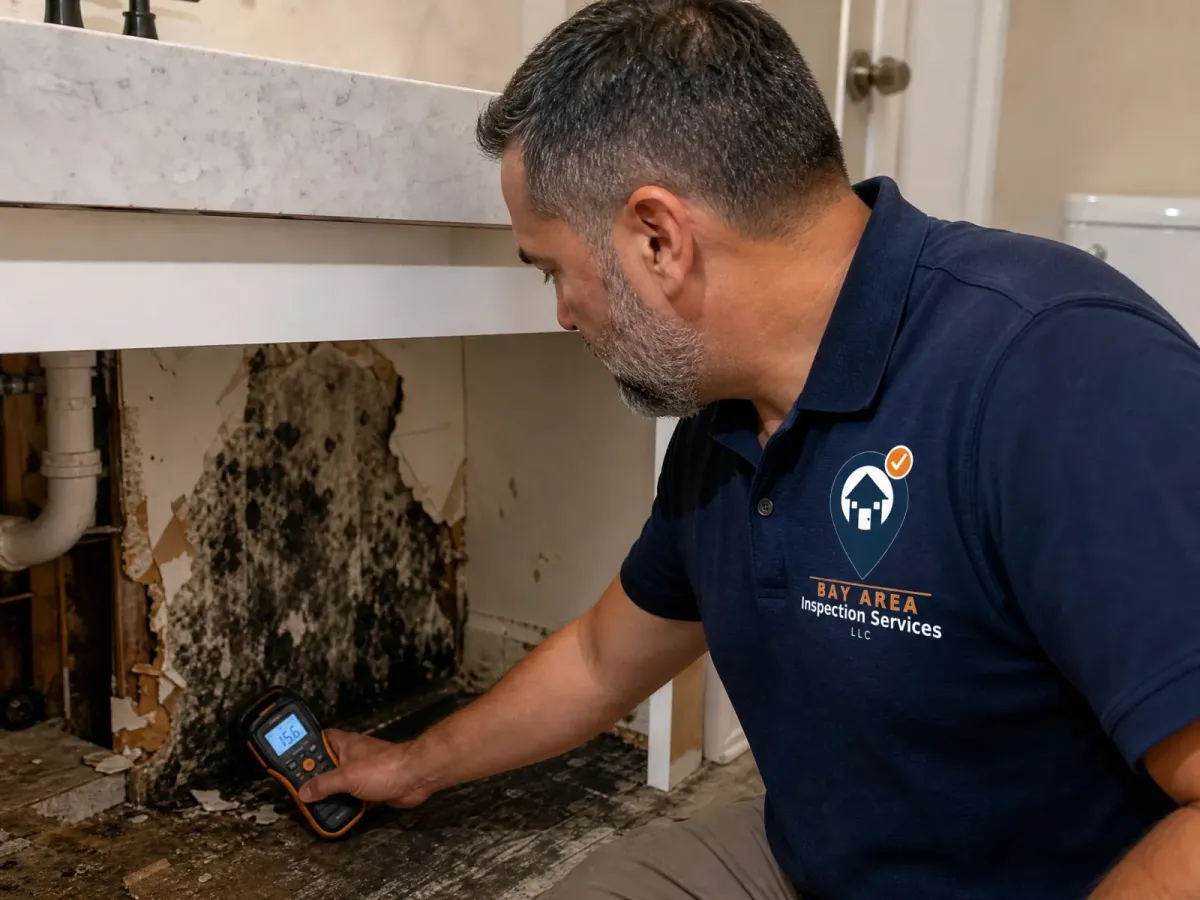
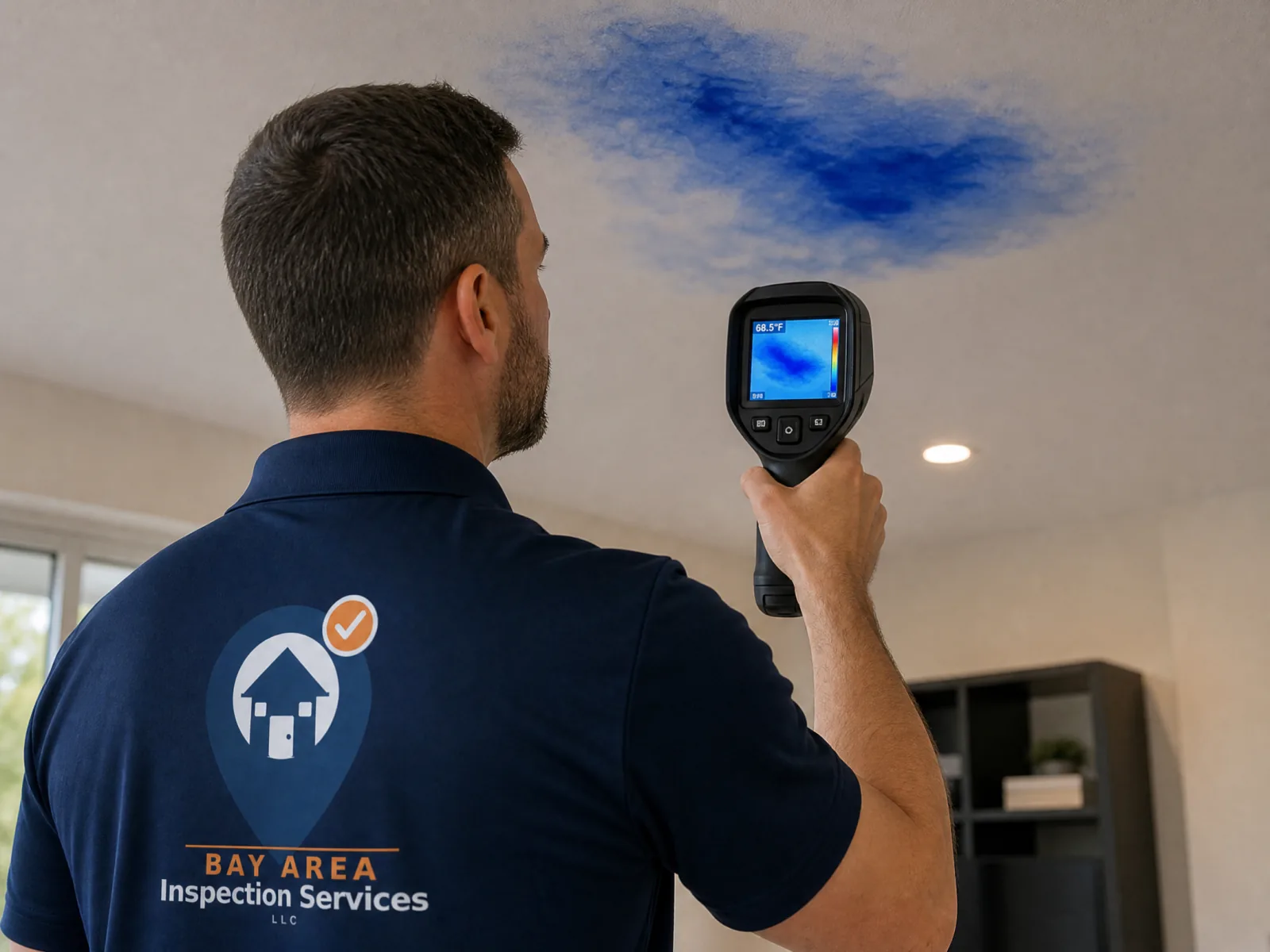
Our moisture and water damage inspection uses infrared thermal imaging to see the temperature differences that betray hidden moisture, combined with calibrated meters that confirm exactly how wet an area is.
Whether you're chasing a mystery leak, evaluating past water damage, or just want peace of mind before buying, we'll map the moisture, identify likely sources, and give you a clear picture of the risk.
Book Moisture & Water Damage
Starting at $119 as a standalone visit, or added to a mold or full home inspection at a reduced rate. Call for a quote.
(628) 230-0357Same-day availability · Report same day
What's Included
Infrared Thermal Scan
Non-invasive imaging of walls, ceilings, and floors to reveal hidden damp areas.
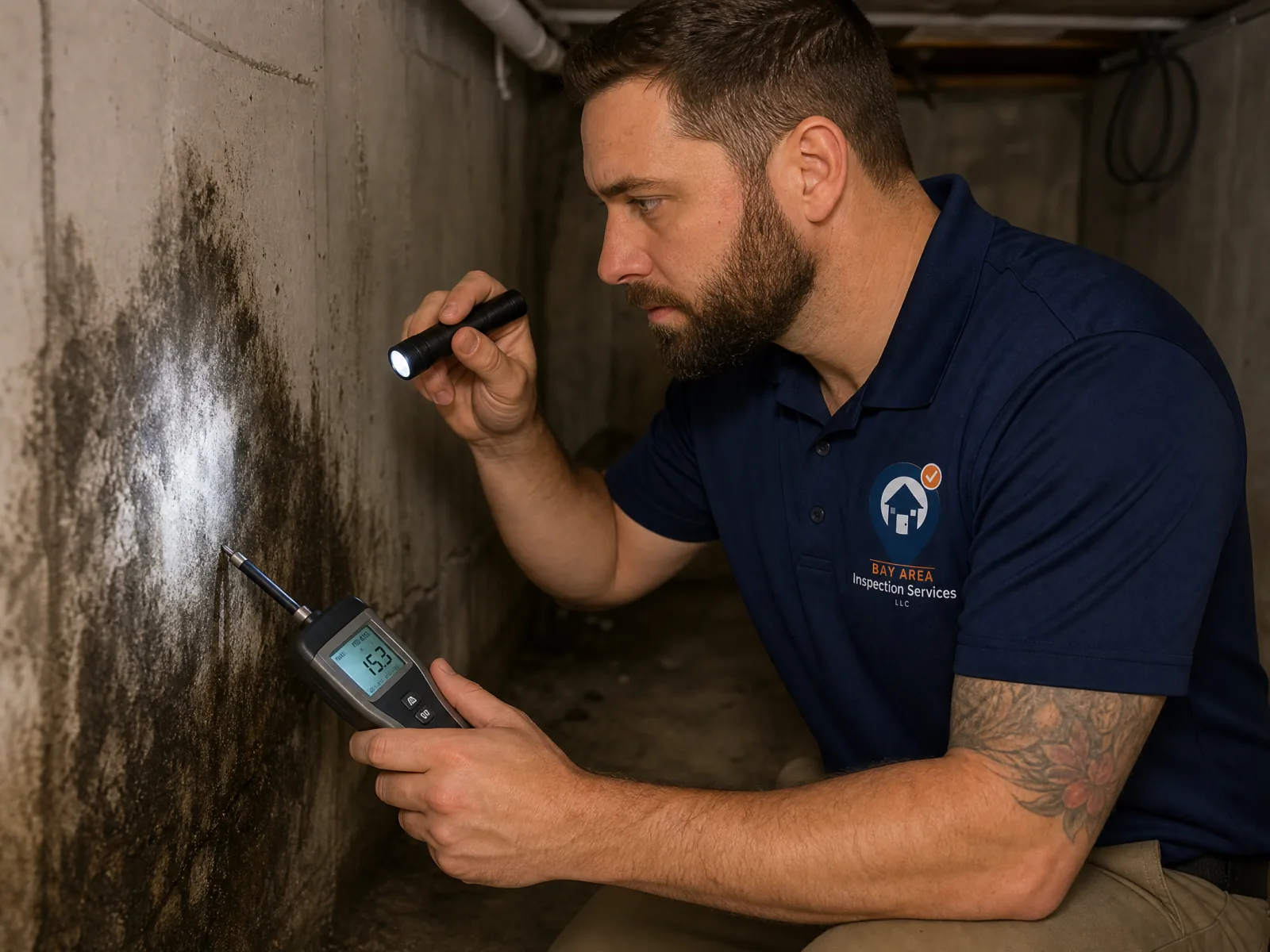
Moisture Metering
Calibrated meters confirm and quantify elevated moisture in building materials.
Leak Source Tracing
We work to identify the likely source — roof, plumbing, windows, or grading.
Past-Damage Evaluation
Assessment of previous water damage and whether it was properly addressed.
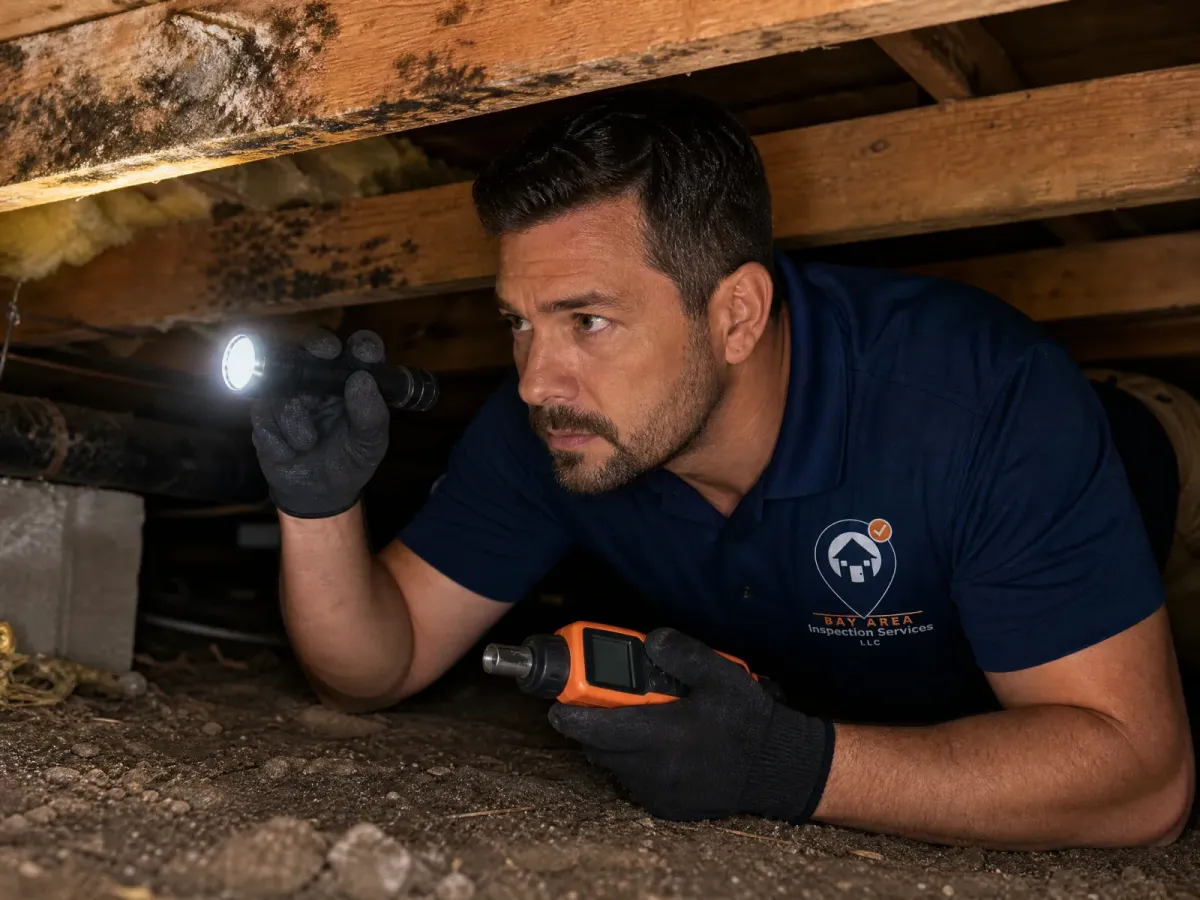
Crawl Space & Attic Check
The hidden spaces where moisture problems most often begin.
Clear Documentation
Thermal images and readings that show exactly what we found and where.
The Equipment We Use
Every instrument below is used on a standard moisture & water damage — none of it is an upsell.
Infrared thermal camera
Evaporating moisture cools a surface, so damp material reads colder than its surroundings. This is what lets us survey an entire wall in seconds without touching it.
Pinless moisture meter
Scans broad areas non-destructively, reading moisture up to about an inch into the material without leaving a mark on finished surfaces.
Pin-type moisture meter
Gives a definitive reading at a specific point and, with extended probes, at depth inside framing.
Hygrometer and dew point calculation
Distinguishes a condensation problem from a leak. Those need completely different fixes, and confusing them wastes money.
Borescope camera
Looks inside a wall cavity through a small hole when the readings justify confirming what is in there.
Manometer and drainage tracing
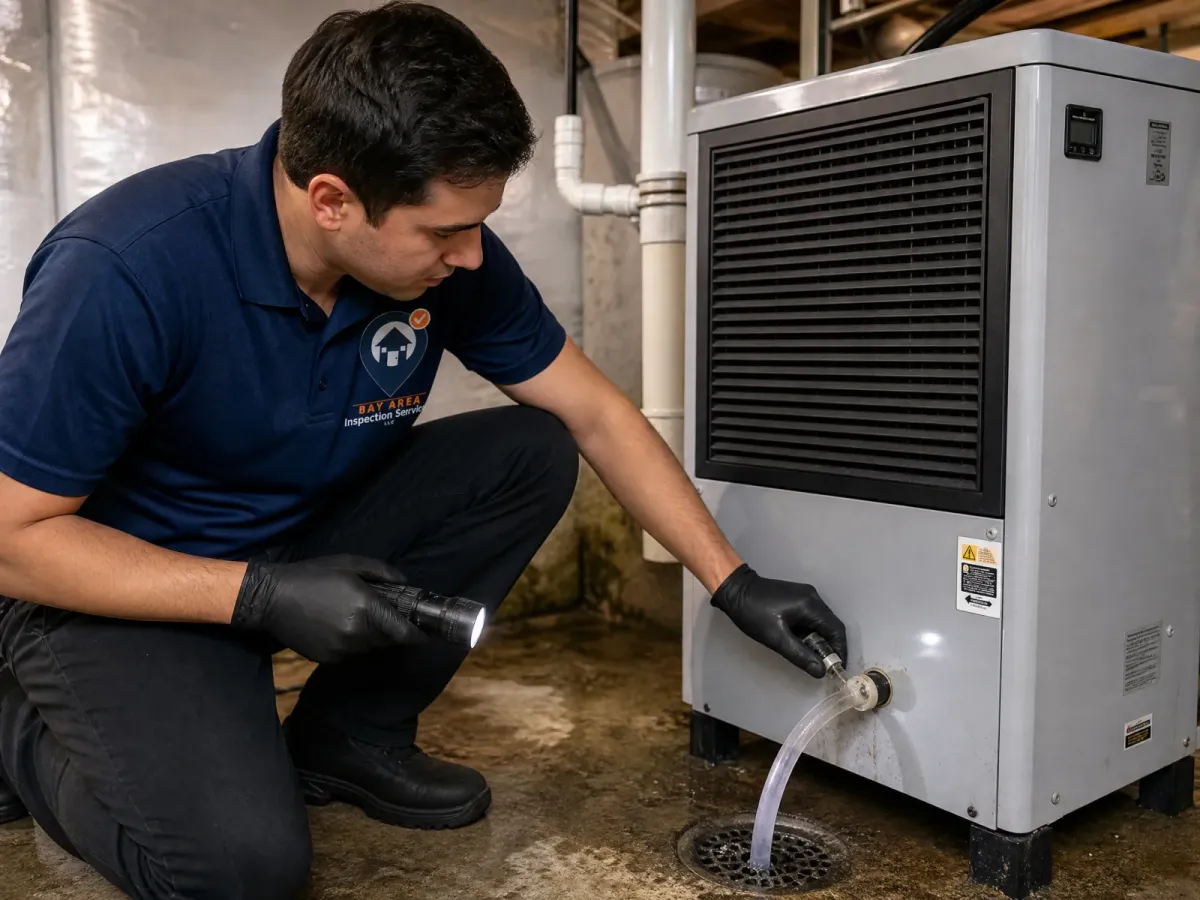
Helps establish whether water is arriving from plumbing, from the exterior envelope, or from ground water at the foundation.
What We Actually Find
The findings that come up again and again on Bay Area properties.
Shower pan and surround leaks
A failing pan or unsealed surround leaks into the framing below, often showing first on the ceiling of the room underneath rather than in the bathroom itself.
Window and door flashing failures
Water entering at a window head runs down inside the wall and appears well below the actual entry point. Thermal imaging shows the full path rather than just the stain.
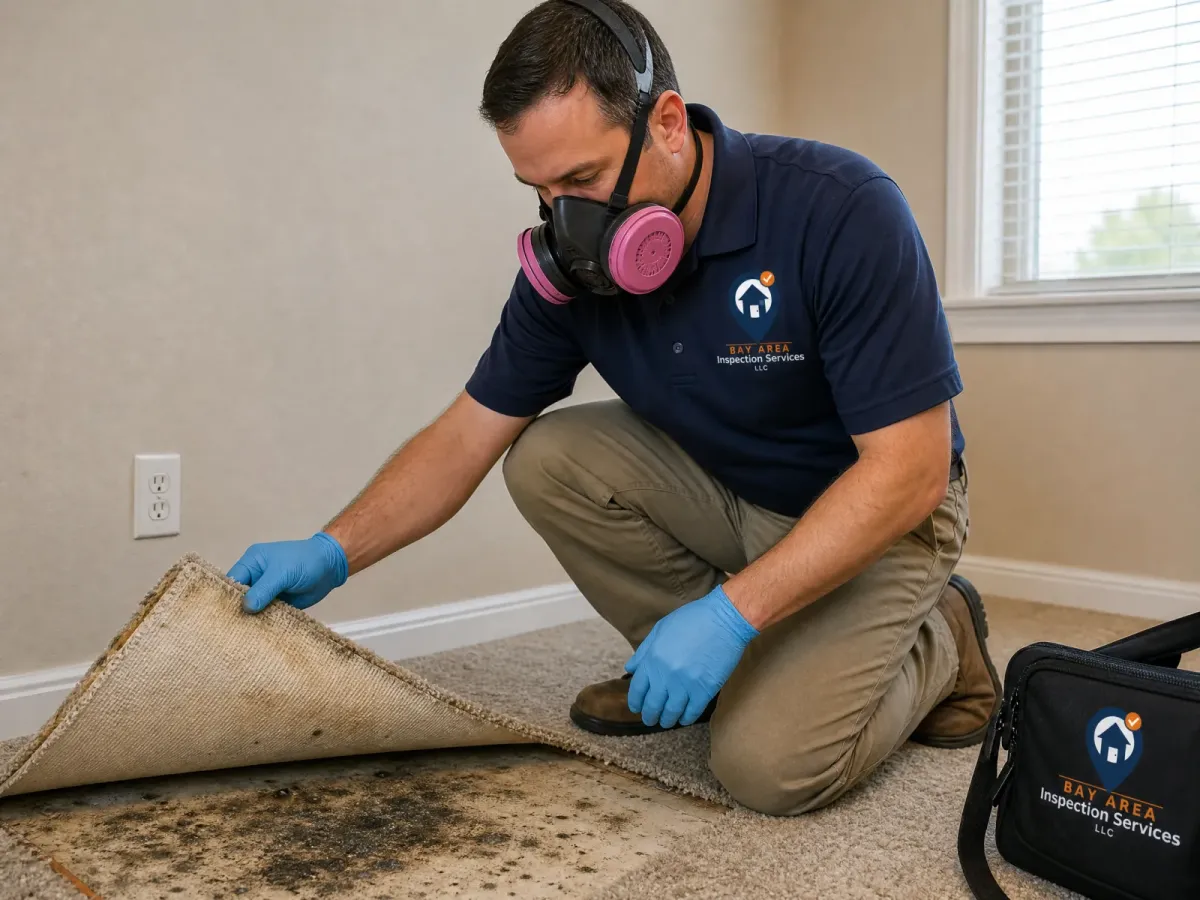
Historic damage that was never dried
A leak repaired years ago frequently left saturated insulation and framing behind the finish. The water stopped; the moisture did not leave.
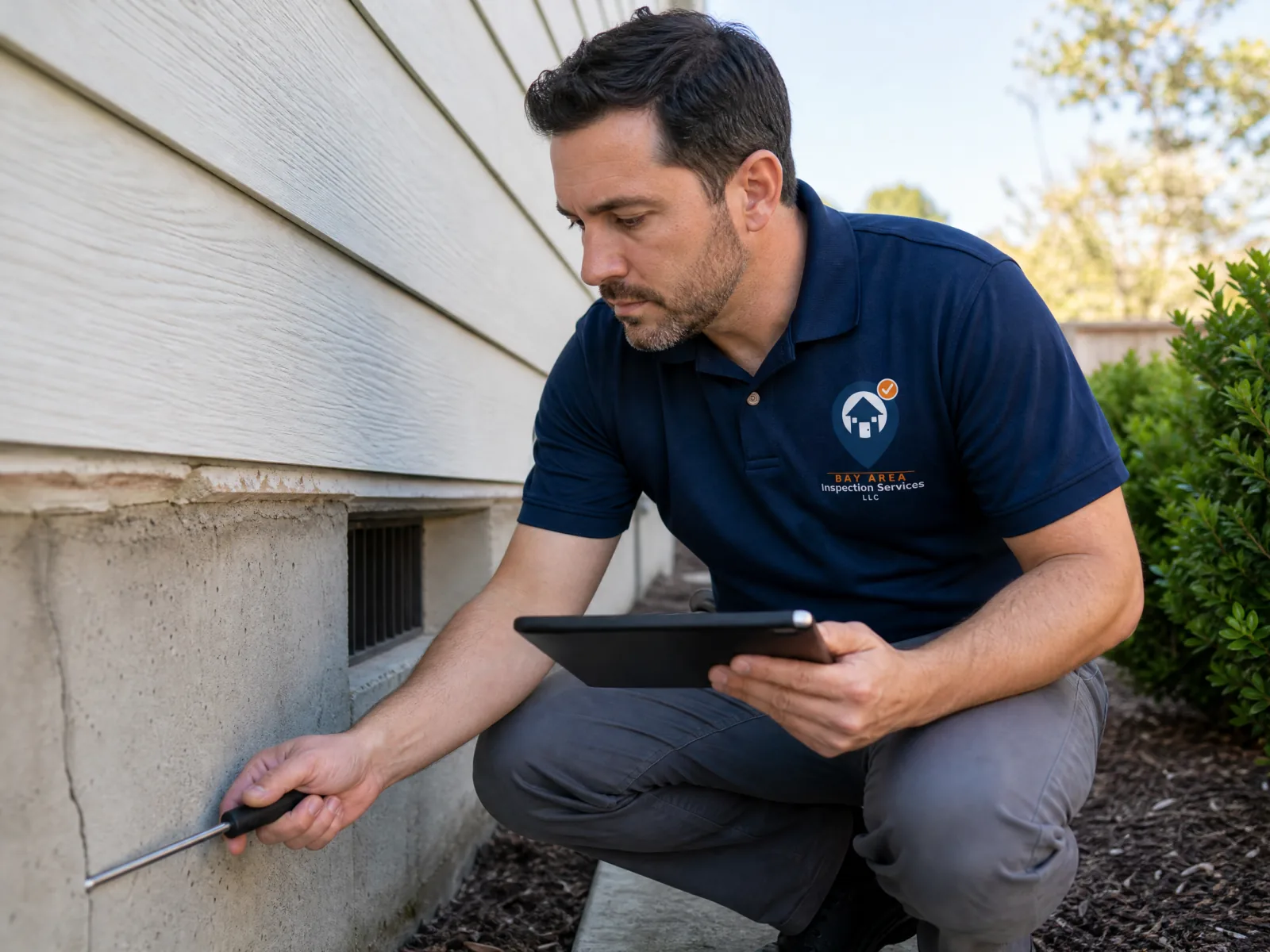
Slab moisture transmission
On slab-on-grade homes over damp soil, moisture migrates up through the slab and shows as flooring failure and baseboard damage with no leak anywhere.
Crawl space ground moisture
Bare soil, torn vapour barrier and blocked vents keep framing damp year-round. The most common root cause we find in low-lying Bay Area cities.
Condensation misdiagnosed as a leak
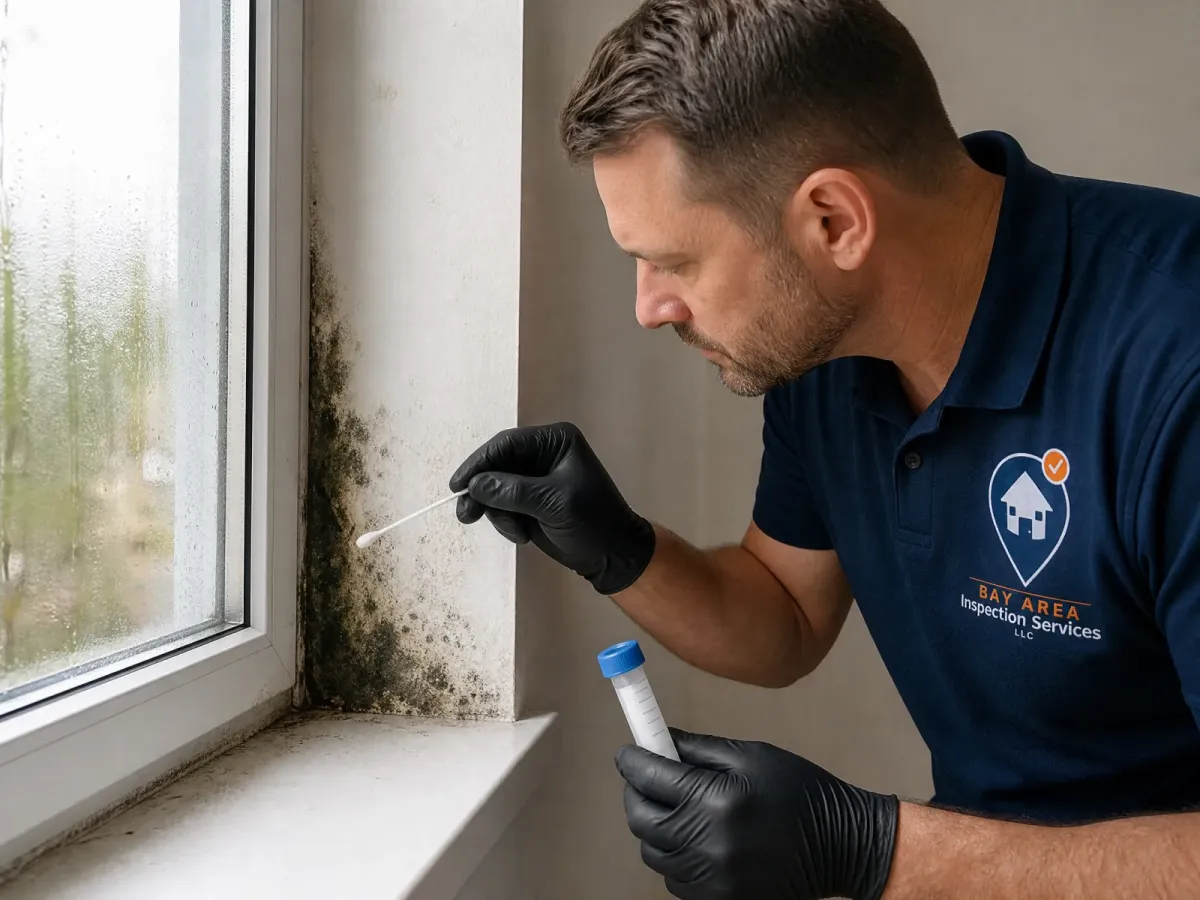
Cold surfaces plus humid indoor air produce wet walls that look exactly like a leak. Getting this right is the difference between adding ventilation and opening a wall for nothing.
Moisture & Water Damage in San Francisco
San Francisco's climate creates moisture problems that inland cities simply do not have. The marine layer keeps humidity high and surfaces damp for extended periods, so exterior wood dries slowly and stays vulnerable. Wind-driven rain off the Pacific pushes water into wall assemblies horizontally, which is why west and southwest-facing elevations weather so much faster than the rest of a building.
The city's construction amplifies it. Light wells, bay windows and the junctions between attached buildings are all places where water collects and dries slowly — and they are precisely where dry rot concentrates in San Francisco housing. Thermal imaging matters more here than almost anywhere, because so much of the damage is inside an assembly that looks intact from the outside.
Who Books This
Owners chasing a mystery leak
You have a stain, a smell or a bill that does not add up, and you need the source found before anyone starts opening walls.
Buyers evaluating disclosed damage
The seller disclosed a past leak. The question is whether it was genuinely fixed and dried, or merely covered.
Anyone before a remodel
Finding moisture before new finishes go on is far cheaper than finding it after.
Owners with recurring mold
Mould that keeps returning after cleaning means the moisture source was never addressed. This finds it.
Our Process
Discuss Concerns
Tell us what you've noticed — stains, smells, past leaks, or high bills.
Thermal & Moisture Scan
We scan suspect areas and confirm readings with calibrated meters.
Trace the Source
We work to identify where the water is coming from, not just where it ended up.
Report
A documented report with thermal images, readings, and recommended next steps.
On the Job
Frequently Asked Questions
Ready to schedule your moisture & water damage?
Same-day appointments and same-day reports. Get honest, documented answers from a certified inspector who actually built homes.