A condo inspection starts at $549 rather than the $649 for a single-family home, and the reason is not that it is a lighter version of the same job. It is a different scope. You do not own a roof or a foundation, so nobody is inspecting yours.
That difference is where the misunderstanding lives. Buyers frequently assume a condo inspection is less necessary because there is less to go wrong. In practice the boundary between what is yours and what is the association's is exactly where the expensive and contested problems sit.
Why it is shorter, and cheaper
A typical condo inspection takes about two hours against roughly three for a house. There is no roof covering to walk, no foundation of your own, no site drainage, and usually no attic or crawl space that belongs to you specifically.
What remains is still substantial: the electrical from your panel in, all supply and waste plumbing within the unit, heating and any cooling, water heater, appliances, windows and doors, interior surfaces, and every wet area. On an older building that is plenty to find things in.
Larger units get quoted before booking rather than after. A large flat in a converted Edwardian can take as long as a modest house, and the price should reflect that up front rather than appearing as a surprise.
What is yours
Generally, everything from the interior surface of the walls inward — though the precise line is set by your building's governing documents, not by a general rule, and it varies more than people expect.
The items that most often produce findings are the ones that were replaced or altered by a previous owner rather than by the association: a bathroom remodelled without upgrading ventilation, a kitchen where the waste line was rerouted, a water heater at the end of its life, an electrical panel with amateur additions, and windows that were replaced individually without addressing the flashing behind them.
What belongs to the association
Roof, exterior walls, structure, common plumbing stacks, and usually the windows in their openings — depending, again, on the documents. These are not inspected as yours because they are not yours, but their condition affects you directly through assessments and through what leaks into your unit.
This is the reason to read the reserve study and the assessment history alongside the inspection report rather than treating them as separate exercises. A building with a roof at the end of its life and a thin reserve fund is telling you about a bill in your future that no inspection of your unit will reveal.
The gap nobody inspects
The interesting failures happen at the boundary. A common plumbing stack that leaks inside a party wall, water entering from the unit above, a shared heating system serving your space, and exterior envelope failures that show up first as a damp patch on your bedroom wall — all of these present inside your unit while originating outside it.
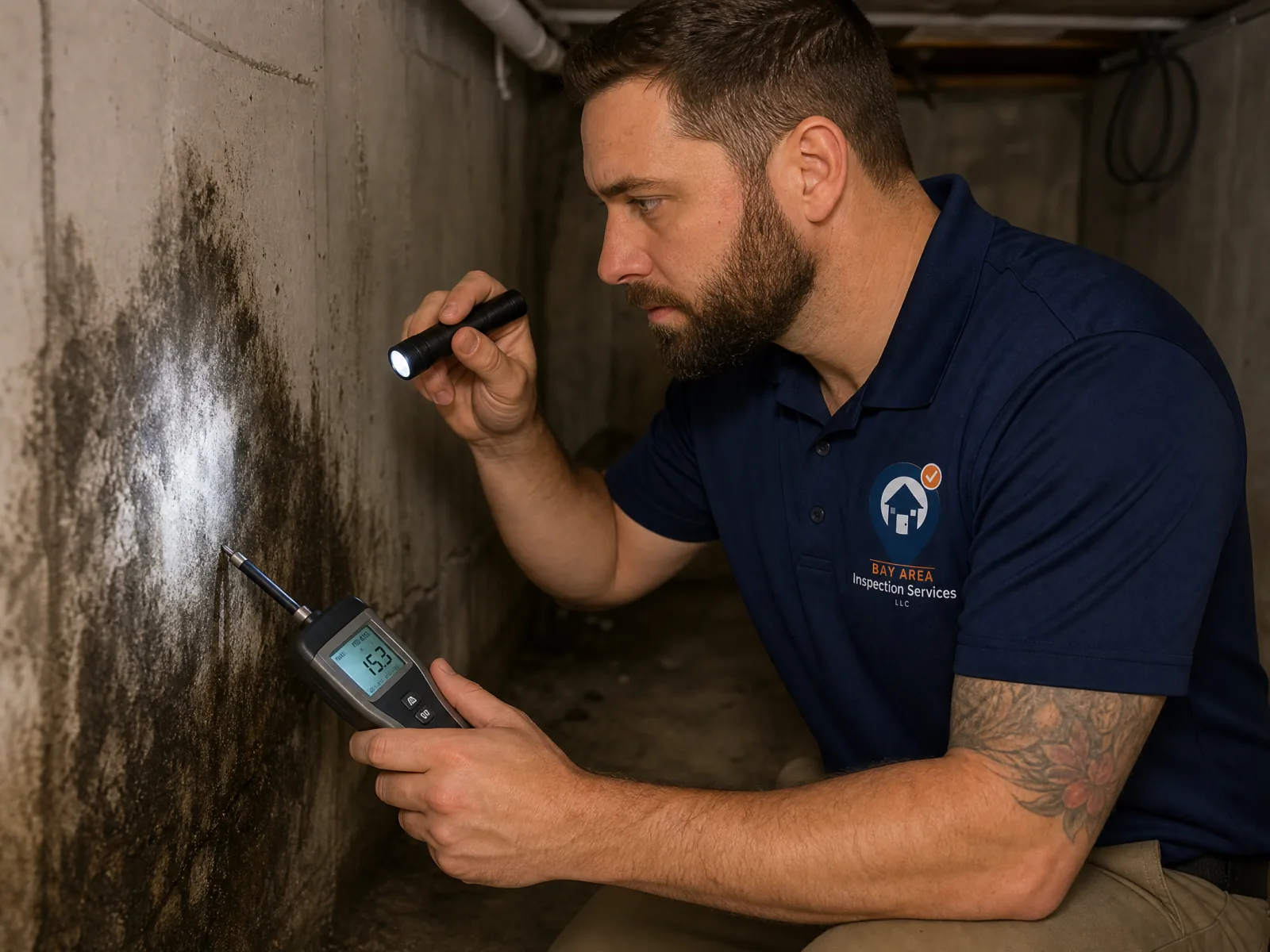
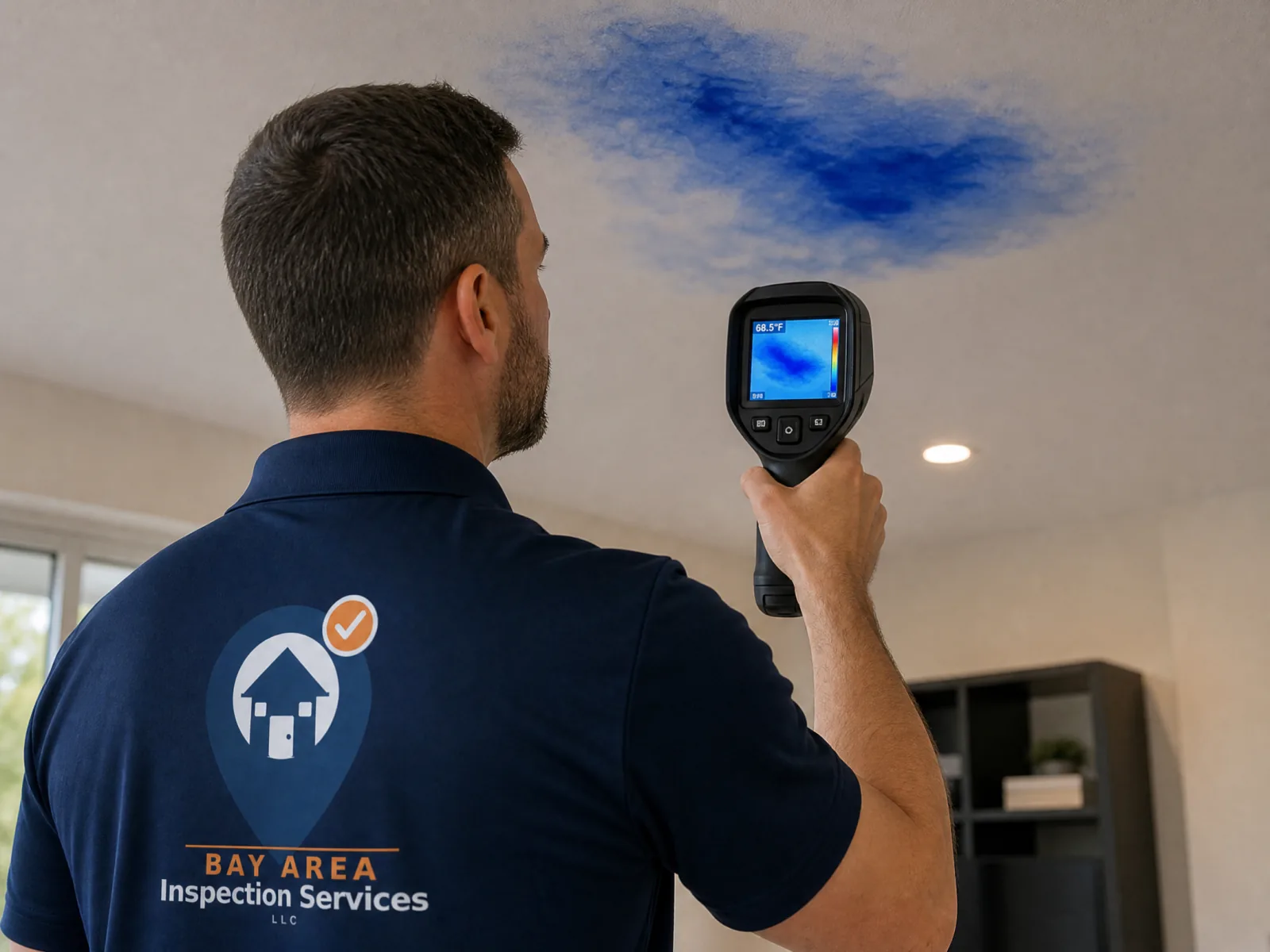
This is precisely where thermal imaging and moisture metering earn their place on a condo inspection. A stain on a party wall is ambiguous by eye. Whether the material behind it is currently wet is not, and that answer determines whether you are looking at an old resolved event or an active leak someone else is responsible for.
Getting that distinction documented before you close matters more in a condo than in a house, because the remedy involves another party. "Wet on the date of inspection, photographed, with moisture readings" is a materially stronger position than "there was a mark on the wall."
San Francisco specifics worth knowing
A large share of the condo stock here is converted rather than purpose-built — two, three and four-unit Victorians and Edwardians divided at some point in the last several decades. Those conversions vary enormously in quality, and the age of the conversion is usually more informative than the age of the building.
The recurring themes in converted buildings are sound and fire separation between units that was done to the standard of its day, plumbing and electrical that were split in ways that are not always obvious, and heating that was subdivided from a single original system. None of these are necessarily defects. All of them are worth understanding before you own one.
Ground-floor and garden-level units carry the additional moisture exposure that comes with sitting against soil, which in this climate combines with fog-driven damp to produce problems that upper-floor units in the same building simply do not have.
Booking a condo inspection
A condo inspection starts at $549 and includes infrared thermal imaging and calibrated moisture readings as standard rather than as add-ons — which on an attached unit is the part that does the most work. The full component checklist sets out everything covered, and the pricing page shows how condo pricing compares to a single-family home.
Where there is any history of a leak from a neighbouring unit or from the building envelope, adding a mold inspection from $279 is worth considering, because that is the scenario where documenting the condition before closing changes who pays. If you already know about a stain or a past leak, mention it when you get in touch so the visit can be planned around it.